
Building a Service Funnel That Converts
By Brendan Byrne - CEO Wednesday, December 24, 2025
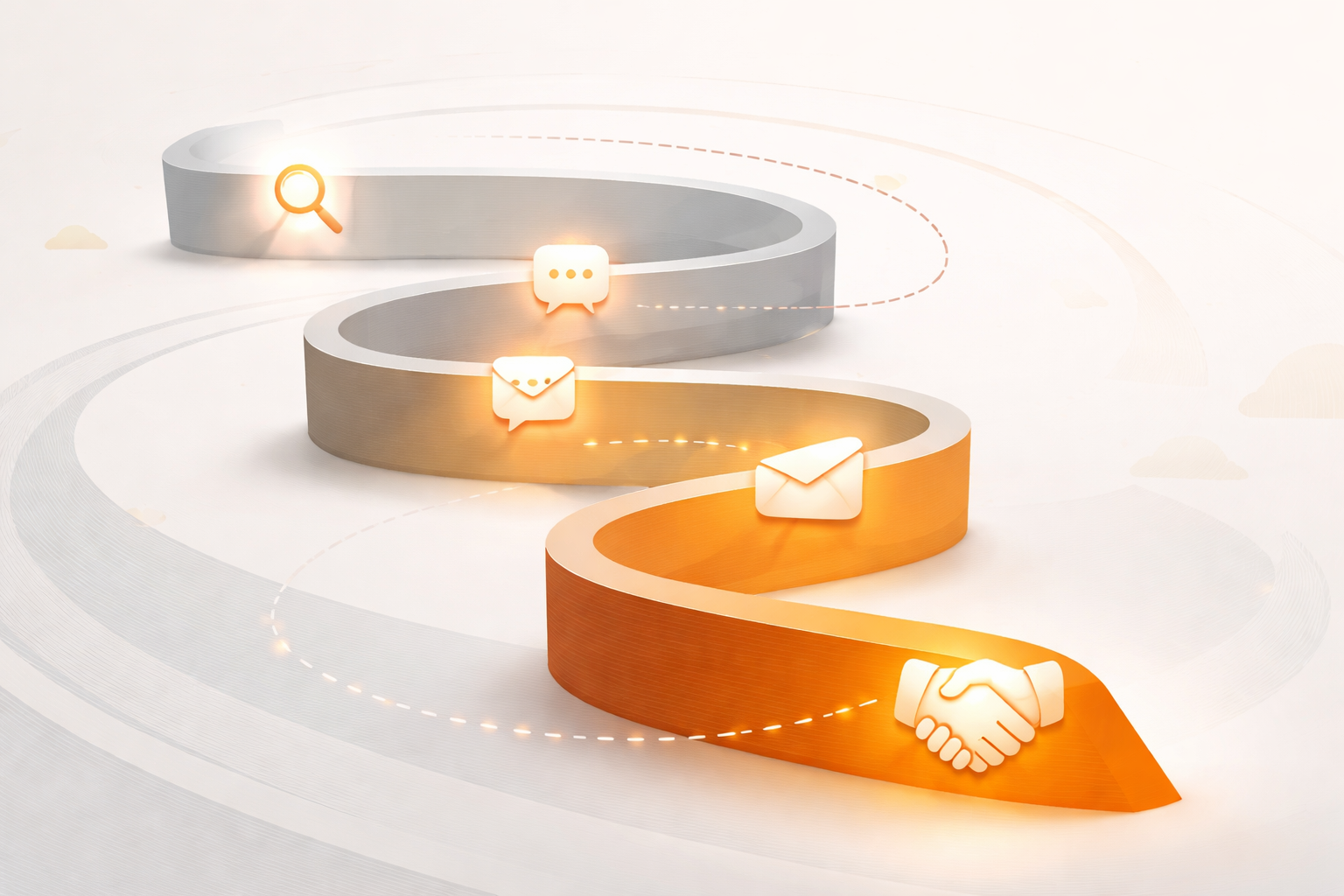
How to Build a Service Funnel That Converts Browsers Into Buyers
For service-based businesses, traffic alone does not equal growth. You can have the most polished website, an active social presence, and strong brand awareness—but without a clear service funnel, potential clients often browse, hesitate, and leave without taking action.
A well-built service funnel bridges the gap between interest and commitment. It guides prospects from curiosity to confidence, removing friction and answering the unspoken question every buyer asks: “Is this right for me?”
At One Orange Cow, service funnels are not treated as generic marketing templates. They are designed as intentional customer journeys—strategic, human-centred, and conversion-driven. This article breaks down how to build a service funnel that genuinely converts browsers into buyers, especially for professional services, consultants, and growth-focused businesses.
What Is a Service Funnel (and Why It Matters)
A service funnel is a structured journey that moves a potential client through stages of awareness, trust, engagement, and decision-making. Unlike eCommerce funnels, service funnels must work harder to establish credibility, reduce perceived risk, and communicate value—because clients are not buying a product, they are buying expertise, outcomes, and confidence.
Without a funnel, your website behaves like a brochure. With a funnel, it becomes a guided experience that does the selling for you—consistently and at scale.
Stage 1: Attract the Right Traffic (Not Just More Traffic)
High-converting funnels start with relevance. If the wrong people enter the funnel, even the best design will fail.
Effective service funnels attract:
- Prospects with a defined problem
- Buyers actively researching solutions
- Decision-makers, not just information seekers
This is achieved through targeted content, clear positioning, and messaging that speaks directly to your ideal client’s pain points. Educational blogs, SEO-optimised pages, and strategic paid traffic all play a role—but only when aligned with a clear service offering.
At this stage, clarity beats cleverness. Your audience should instantly understand:
- Who you help
- What problem you solve
- Why your approach is different
Stage 2: Build Trust Before Asking for Commitment
Trust is the currency of service-based conversions. Most visitors are not ready to enquire on their first visit—and they shouldn’t be forced to.
Instead, the funnel should provide low-risk trust builders such as:
- Insight-driven content
- Case studies and real results
- Clear explanations of process
- Authority signals (experience, frameworks, outcomes)
This is where many businesses lose conversions—by pushing a “Contact Us” button too early without earning confidence. A strong service funnel educates before it sells.
This is also why professionally structured service pages matter. For example, One Orange Cow’s approach to strategic growth and digital performance is reinforced through clarity of service, depth of explanation, and proof of outcomes rather than hype.
You can see how this principle is applied in their service-led strategy framework here:
👉 https://www.oneorangecow.com/services/
Stage 3: Create Micro-Commitments That Move People Forward
People convert in steps, not leaps.
A well-designed funnel introduces micro-commitments—small actions that signal intent without pressure. These might include:
- Downloading a guide
- Booking a strategy call
- Completing a short enquiry form
- Requesting an audit or review
Each action moves the prospect closer to a buying decision while reinforcing trust. Importantly, every step should feel helpful, not sales-driven.
For service businesses, the goal is not volume—it is qualification. A strong funnel filters out poor-fit leads while warming up the right ones.
Stage 4: Position Your Service as the Obvious Solution
By the time a prospect reaches the decision stage, your funnel should have already answered their objections:
- “Will this work for my business?”
- “Is this worth the investment?”
- “Can I trust these people?”
This is where service positioning becomes critical. High-converting funnels clearly communicate:
- The problem you solve
- Your method or framework
- The outcome clients can expect
- Why your service is structured the way it is
Instead of listing features, focus on transformation. Buyers do not want tasks completed—they want progress, results, and clarity.
Stage 5: Make the Conversion Simple and Human
Complex forms, vague calls-to-action, and unclear next steps kill conversions.
At the final stage, your funnel should:
- Clearly state what happens next
- Reduce friction (short forms, clear timelines)
- Reinforce reassurance (“no obligation”, “strategy-first”, etc.)
For service businesses, the conversion is often a conversation—not a checkout. That conversation should feel like a natural next step, not a sales ambush.
Why Most Service Funnels Fail
Most service funnels fail for one of three reasons:
- They are built around the business, not the buyer
- They push for conversion before trust is established
- They lack strategic structure
A funnel is not just pages and forms—it is psychology, sequencing, and clarity. This is why experienced strategy-led agencies consistently outperform DIY funnels built from disconnected tools.
Turning Your Funnel Into a Growth Asset
When built correctly, a service funnel becomes:
- A 24/7 sales system
- A lead qualification engine
- A trust-building mechanism
- A scalable growth asset
Instead of chasing leads, your funnel does the heavy lifting—educating, qualifying, and converting the right prospects automatically.
For businesses ready to grow beyond referrals and inconsistent enquiries, investing in a strategic service funnel is not optional—it is foundational.
Final Thoughts
Browsers do not become buyers by accident. They convert when guided through a journey that feels intentional, valuable, and aligned with their needs.
A high-converting service funnel is not aggressive—it is helpful. It removes uncertainty, builds confidence, and positions your service as the logical next step.
For service-based businesses looking to turn attention into action, the funnel is where growth truly begins.